

Last Updated: November 4, 2026
Quick Summary
Police officers can manage occupational stress by noticing changes in sleep, mood, focus, and relationships, then building practical coping and recovery steps into their routines. Take brief pauses when duty allows, create a transition between work and home, and seek support from a trusted person or mental health professional if strain persists or affects daily life.
- Check in with your mood, energy, sleep, and relationships to notice changes.
- Before a shift, check your mood and energy; during it, pause when duty allows.
- After work, change clothes, breathe slowly, or talk with someone trusted.
- Ask a therapist about experience with first responders, scheduling, and confidentiality.
Table of Contents
- Step 1: Recognize Signs of Stress in Police Officers
- Step 2: Understand Police Officer Burnout and Stress Responses
- Step 3: Build Coping Strategies for Police Officers Into Each Shift
- Step 4: Protect Recovery, Sleep, and Relationships
- Step 5: Seek Therapy for First Responders When Stress Persists
- Step 6: Check Whether Your Stress Plan Is Helping
- Schedule a Virtual Consultation With Brown & Williams
- Frequently Asked Questions
Step 1: Recognize Signs of Stress in Police Officers
Occupational stress in police officers can show up in mood, sleep, focus, or relationships. Occupational stress is the strain linked to job demands and work conditions. This guide offers practical ways to notice that strain and respond without judgment.
According to CNA’s Work and Life Stressors of Law Enforcement Personnel, work schedules, patrol duties, long hours, and overtime can add to job stress. A common mistake is to wait for one major incident before taking stress seriously. Daily strain matters, too.
Watch for changes such as:
- Trouble sleeping or feeling rested
- Irritability, worry, or low mood
- Pulling away from family or friends
- Difficulty focusing or unwinding after work
These signs do not prove a mental health condition. They are reasons to pause, notice what has changed, and seek support if the changes persist or affect daily life.
Notice changes in mood, sleep, and relationships
A simple check-in can help you spot patterns without judging yourself. Ask: “What feels different this week?” Note changes in sleep, mood, energy, and connection with others. You can also ask someone you trust what they have noticed.
Step 2: Understand Police Officer Burnout and Stress Responses
Police officer burnout can grow when work strain continues without enough recovery or support. Acute stress is a short-term response to a demanding event; chronic stress is strain that continues over time. The distinction can help you choose a next step, but it cannot diagnose a condition.
After a critical incident, the body may stay alert, tense, or on edge. Ongoing workload, unpredictable hours, and repeated exposure to trauma can make it harder to settle. A review by Queirós and coauthors describes policing as stressful and links job stress with effects on physical and mental health, burnout, and other serious concerns Job Stress, Burnout and Coping in Police Officers.
Notice whether stress eases with rest and support or keeps affecting work, sleep, and relationships. Both patterns deserve care.
Separate acute stress after an incident from ongoing strain
After a difficult call, a brief pause and contact with a trusted person may help you regroup. Ongoing strain calls for a broader plan, such as regular check-ins, peer support, or counseling. The Illinois Criminal Justice Information Authority describes training, counseling, and peer support as approaches to police stress and barriers to care Illinois Criminal Justice Information Authority guidance on police stress programs.
Step 3: Build Coping Strategies for Police Officers Into Each Shift
Coping strategies for police officers work best when they fit the shift, not an ideal routine. Use a simple before-during-after plan: prepare, pause when safe, then make space to decompress. Small steps can support emotional regulation without asking you to ignore what happened.
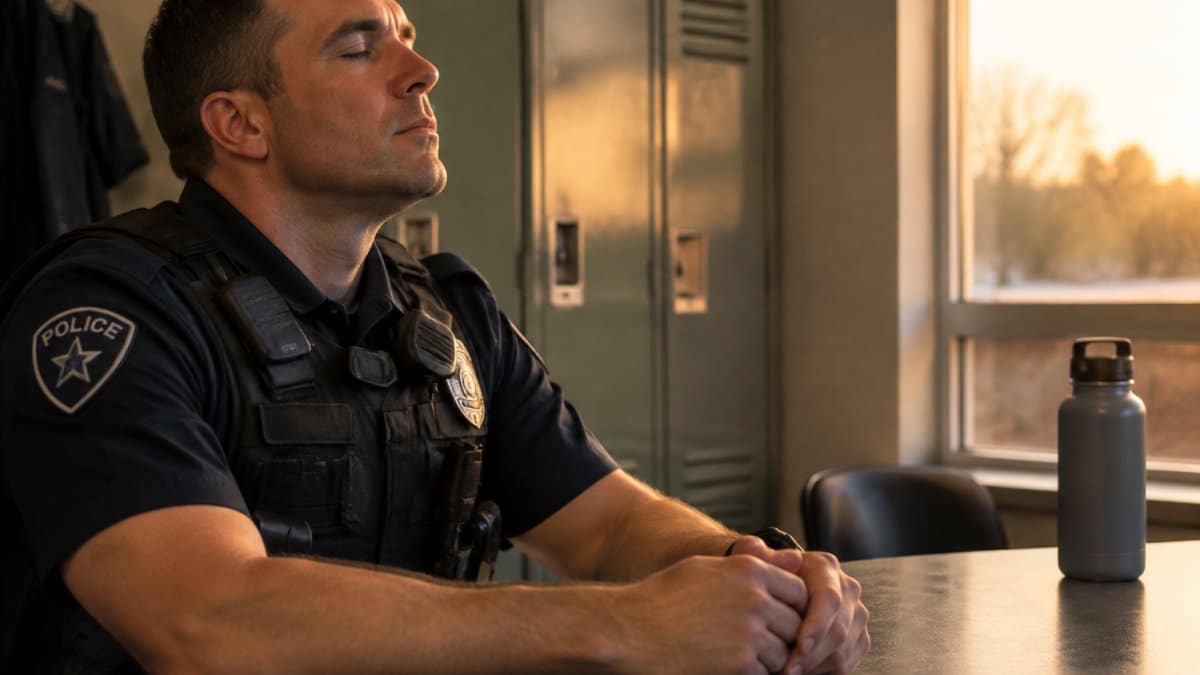
Before, during, and after a shift:
- Before: Check in with your mood and energy.
- During: Take a brief pause when duty allows.
- After: Change clothes, breathe slowly, or talk with someone trusted.
A common mistake is using alcohol or isolation as the only way to cope. The Illinois Criminal Justice Information Authority notes that coping strategies vary and some can be maladaptive. Choose options that support recovery and connection instead.
A simple before-during-after plan can make coping strategies easier to use during a shift.
| Shift stage | What to do |
|---|---|
| Before | Check in with your mood and energy. |
| During | Take a brief pause when duty allows. |
| After | Change clothes, breathe slowly, or talk with someone trusted. |
Step 4: Protect Recovery, Sleep, and Relationships
Recovery can be difficult when a shift ends at a different time each week or a call keeps you alert after work. Rather than aiming for a perfect routine, build a few repeatable cues around sleep, decompression, and reconnecting with people at home. These steps cannot remove the demands of police work, but they can make recovery more deliberate.
Make sleep more workable around shifts
After a night shift, decide in advance what needs to happen before bed and what can wait. Keep the post-shift routine simple: finish essential tasks, reduce bright light and stimulation as you prepare for sleep, and make the bedroom as dark, quiet, and comfortable as you can. If daytime noise is a problem, consider practical changes such as a sleep mask, earplugs, or asking household members to protect a quiet period when possible.
When your schedule rotates, a consistent wind-down sequence may be more realistic than a fixed bedtime. Try repeating the same few cues, such as changing clothes, having a light snack if hungry, and taking a few minutes for slow breathing, so your body has a recognizable transition from work to rest.
Create a transition between work and home
A short decompression routine can help you notice what you are carrying before you walk into family life. You might sit quietly for a few minutes, take a shower, change clothes, or tell a trusted person, “I need a little time to settle, and then I want to reconnect.” Be specific about the time or signal you need, and follow through when you can.
Schedule a Free Consultation →
If a call is still weighing on you, you do not have to share details you cannot or do not want to discuss. You can say, “Work was hard today, and I’m not ready to talk about the details. I could use company,” or ask whether your family has the capacity to listen.
Notice the relationship pattern, not just the argument
Stress may show up as snapping, withdrawing, or feeling unable to switch off. If you notice a recurring pattern, name it without blame and ask what would make the transition easier for both of you.
Watch out: Using alcohol or isolation as the only way to come down from a shift can make it harder to build restorative sleep and connection; consider adding another coping option and talking with a professional if the pattern is becoming difficult to change.
If sleep disruption or relationship strain continues to affect daily life, a mental health professional can help you explore options that fit your schedule and circumstances. Brown & Williams Psychotherapy offers virtual psychotherapy, which may make it easier to discuss stress and relationships without adding a commute.
Step 5: Seek Therapy for First Responders When Stress Persists
You do not need to wait until stress feels unbearable to talk with a mental health professional. Consider reaching out when changes in sleep, mood, concentration, or relationships keep returning, when it is taking longer to recover after difficult calls, or when the ways you have been coping are creating new problems. These signs do not establish a diagnosis; they are reasons to consider support.
Choose a next step that fits the level of concern
If stress is affecting your daily life but you feel safe, you can start by scheduling a consultation with a therapist, contacting an employee assistance resource if available, or asking a trusted health professional for guidance. You can also speak with a peer-support contact if that feels more approachable, while remembering that peer support and psychotherapy serve different roles.
If you are worried about your immediate safety or someone else’s, seek urgent help rather than waiting for a routine appointment. In the United States, call or text 988 for the Suicide & Crisis Lifeline; call 911 or go to an emergency department if there is immediate danger. You do not have to decide on your own whether a situation is “serious enough” to ask for help.
Make the first conversation more useful
Before a consultation, jot down what has changed and what you hope might improve. You might mention sleep after night shifts, feeling on edge after calls, conflict at home, or difficulty leaving work concerns at work. You can also bring questions such as:
- What experience do you have supporting law enforcement or other first responders?
- How do you adapt sessions to rotating or unpredictable schedules?
- What should I understand about confidentiality and its limits?
- What happens if I am unsure whether the approach is a good fit?
Privacy concerns can be a real barrier to care. Ask the therapist directly how information is handled and what exceptions to confidentiality apply. If you are considering a department resource, ask who can access records and what information, if any, is shared with the employer.
A therapist who understands first-responder culture can make room for the realities of the work without expecting you to explain every detail. You can share at your own pace and discuss how stress affects your life, relationships, and sense of well-being. Brown & Williams Psychotherapy provides virtual support for law enforcement and first responders.
For more on care after traumatic calls, read about PTSD therapy for first responders. Brown & Williams also explains mental health support for first responders.
Step 6: Check Whether Your Stress Plan Is Helping
A stress plan is useful when it helps you notice patterns and make choices, not when it becomes another task to fail. Check in regularly with a few plain questions: Am I sleeping better? Can I unwind after work? Do I feel more connected at home?
Use this short checklist:
- Name one stress sign to watch.
- Choose one coping step for each shift.
- Note what helps and what makes stress worse.
- Ask for support if strain continues or grows.
If the plan is not helping, adjust it with a trusted person or mental health professional. The goal is not to feel calm all the time; it is to build support that fits your life and work.
Schedule a Virtual Consultation With Brown & Williams
Police work can bring stress that is hard to carry alone, and asking for help is a practical step. Brown & Williams Psychotherapy PLLC offers virtual psychotherapy and tailored support for law enforcement and first responders. Schedule a virtual consultation to discuss what you are facing and whether the practice may fit your needs.
Frequently Asked Questions
How can police officers manage stress after a difficult shift?
Create a brief transition routine that separates work from home: pause somewhere private, use slow breathing or another grounding practice, and give yourself time to decompress before moving into family responsibilities. Notice whether sleep, mood, or relationships change after difficult shifts. Occupational stress can build from schedules, patrol work, long hours, and overtime as well as critical incidents, so recovery routines work best alongside support from trusted colleagues or a mental health professional.
What are common signs of stress in police officers?
Stress can show up as changes in sleep, mood, concentration, patience, physical wellbeing, or connection with family and colleagues. Burnout, anxiety, depression, and trauma-related distress are also concerns discussed in research on policing. These signs do not establish a diagnosis, but persistent changes or difficulties functioning are reasons to seek professional guidance. Tracking when changes occur, such as after overtime or a difficult incident, can help clarify what support may be useful.
When should a police officer seek therapy for work-related stress?
Therapy is worth exploring when stress feels persistent, affects work or relationships, disrupts sleep, or feels difficult to manage with existing coping strategies. You do not need to wait for a crisis or decide on a diagnosis before asking for support. Brown & Williams Psychotherapy offers virtual services and consultations.
Can individual coping strategies alone address occupational stress?
Not always. Work schedules, long hours, overtime, and patrol demands can contribute to stress, so personal routines cannot change every source of strain. The Illinois Criminal Justice Information Authority describes training, counseling, and peer-support programs as approaches that can address stress and barriers to treatment. Individual coping strategies can still be useful, especially when paired with colleague support, wellness check-ins, and organizational attention to officer wellbeing.
