
Table of Contents
- Telehealth Therapy in a Parked Car: What Makes It Workable
- Therapy While Driving: Why It Is Not Recommended
- Virtual Therapy Privacy in a Car: A Practical Checklist
- Private Places to Do Virtual Therapy Besides Your Car
- Connection and Interruption Troubleshooting
- Book Your Virtual Session With Brown & Williams
- Frequently Asked Questions
Last Updated: November 3, 2026
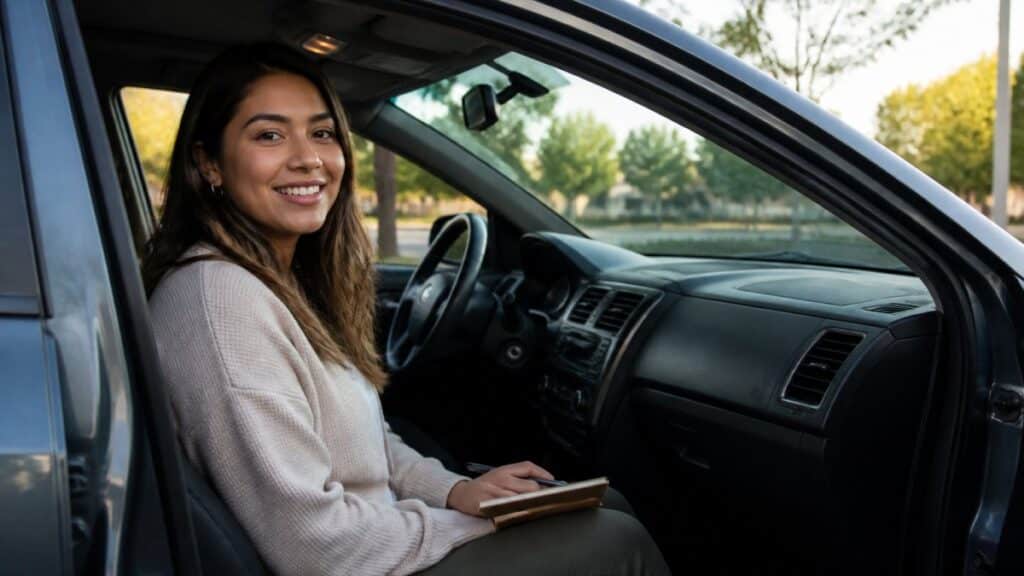
Can you really do therapy from your car? Virtual therapy has made it possible to attend a session from almost anywhere with a phone or computer and a stable connection. Brown & Williams Psychotherapy, PLLC offers virtual psychotherapy for New York residents, and we understand why a parked car sometimes looks like the only private space available during a busy day.
A recent survey from Grow Therapy found that 29% of respondents joined virtual sessions from a parked car, while 39% joined from bed. Grow Therapy’s “Top of Mind 2026” survey on where people join virtual therapy The survey shows that many people are already doing this.
Telehealth Therapy in a Parked Car: What Makes It Workable
A parked car can work for telehealth therapy when it is stopped, safe, and private enough for you to speak openly. The vehicle itself is rarely the real issue. What matters is where the car is parked, whether anyone can hear you, and whether you can stay focused for the full session.
- When you do therapy from my car, the car must be off the road and fully stopped.
- The engine should be off or in a safe, parked state.
- You should have a quiet, enclosed space where you can talk without being overheard.
- Your connection should be steady enough for video or audio to stay clear.
Why parking matters more than the car itself
The location of the car decides most of the risk. A driveway at home, a private garage, or a quiet spot in a secure lot gives you far more privacy than a busy street or a crowded parking lot. Choose a spot where you feel comfortable, and avoid anywhere you might be interrupted, approached, or watched.
Therapy While Driving: Why It Is Not Recommended
Never attend a therapy session while you are driving. The National Highway Traffic Safety Administration reports that distracted driving claimed 3,208 lives in 2024. NHTSA’s distracted driving statistics That statistic covers distracted driving in general, not therapy specifically, but it is a clear reason to stop and park before you begin.
If a session starts and you realize you are on the road, pull over safely as soon as you can, or ask to reschedule. Your safety comes first.
Virtual Therapy Privacy in a Car: A Practical Checklist
Privacy is the concern people raise most often about car sessions, and it is the one you have the most control over. A useful way to think about it is in two layers: what you can see and what you can hear. Most privacy failures happen in one of those two layers, and each has a simple fix.
The visibility layer
Before you start, look at your car from the outside, or imagine how it looks to someone walking past. Windows act like screens at night and like mirrors in bright sun, so the same spot can feel private at noon and exposed after dark.
- Park facing away from foot traffic, windows, and doorways rather than toward them.
- Use sunshades or a windshield cover on the side that faces the most traffic.
- Sit in the back seat if the front is more visible from the street.
- Avoid spots where people linger, such as the front row of a busy lot or a drive-through lane.
- Keep the engine off so idling and exhaust do not draw attention.
Watch out: a quiet lot can feel private but still have clear sightlines from a nearby building, so check the upper windows before you settle in.
The audio layer
Sound travels further than most people expect, especially with the windows down. Headphones help you hear your therapist, but they do not stop your voice from carrying.
- Use a headset with a boom microphone so you can speak at a normal volume instead of raising your voice.
- Keep windows closed and vents on low; road noise and fans both push you to talk louder.
- Test your volume by recording a short voice memo and playing it back at the distance a passerby would stand.
- Park away from idling trucks, construction, and busy intersections so you are not competing with noise.
The practical checklist
- Park in a legal, private spot away from traffic and sightlines
- Close windows and doors; set vents to low
- Put on a headset with a microphone
- Silence notifications and close other apps
- Confirm camera and microphone work before the session
- Keep a charger nearby or confirm your battery is high
- Have water and tissues within reach
- Tell your therapist your setup at the start of the session
Who is responsible for what
Privacy is a shared job, and it helps to know which parts belong to whom. You control your location, your device, your volume, and who is near you. Your therapist is responsible for the session on their end: using a secure platform, conducting the session from a private space, and following confidentiality practices. A common pattern is for the therapist to confirm at the start that you are in a private spot and to pause if either of you hears something that suggests you are not.
When privacy is not possible
If you cannot find a spot where you feel comfortable speaking openly, that is useful information, not a failure. It may be better to reschedule, switch to a phone session from a quieter place, or use a room at home with the door closed. Brown & Williams Psychotherapy, PLLC provides virtual psychotherapy, and we are glad to talk through what setup would help you feel safe before your first appointment.
Private Places to Do Virtual Therapy Besides Your Car
A car is not always the best choice. You can also read about the broader benefits of virtual therapy sessions to see how flexible setups can fit your life. Grow Therapy’s survey on virtual therapy locations shows how often people join from different places, which can help you think about your own options.
If your schedule is the main barrier, look at flexible times that fit your day. Consider flexible times that fit your day, and reach out to the practice to see whether an online session fits your needs.
Schedule a Free Consultation →
Connection and Interruption Troubleshooting
Technology problems are common in car sessions, and most of them are predictable. A little preparation covers the majority of them, and a simple plan covers the rest.
Before the session
- Charge your phone or laptop before the session, and bring a car charger or power bank if you have one.
- Test your connection from the exact spot you plan to park; signal can differ by a few hundred feet. If you are unsure what a session requires technically, this plain explanation of how telehealth therapy works covers what to expect.
- If you use mobile data, check your plan’s data allowance so a video session does not surprise you.
- Close other apps that use the camera, microphone, or bandwidth.
- Do a short test call to confirm audio and video work.
During the session
- If video freezes, switch to audio rather than dropping the call.
- If audio cuts out, move the device closer and check that the microphone is not covered.
- If background noise rises, close windows, lower vents, and use a headset with a microphone.
- If the call drops, stay parked, reconnect, and message your therapist if the platform allows it.
A simple interruption plan
Agree with your therapist in advance on what to do if something goes wrong. A workable plan has three steps: pause the conversation, fix the problem if you can do so safely, and if you cannot, reschedule the remaining time or switch to a phone call.
Watch out: do not try to troubleshoot while the car is moving. Pull over safely first, or end the session and reschedule.
When the car is moving or you are interrupted
Attending a session while driving is not an appropriate setup, and it is not something to work around. If a session begins and you realize you are on the road, pull over safely as soon as you can, or ask to reschedule. If you are interrupted by a passenger, a phone call, or someone at your window, pause the session and decide together whether to continue, switch to audio, or pick up another time. Your therapist can help you resume where you left off.
When problems keep happening
If connection issues are frequent, the fix is usually environmental rather than technical: a different parking spot, a different time of day, or a wired headset. For practical alternatives, see online therapy options for busy schedules. If the car is consistently unreliable, it may be worth planning sessions from a room at home or another private space. Brown & Williams Psychotherapy, PLLC offers virtual psychotherapy, and we are happy to help you think through a setup that keeps your sessions steady and private. Contact us to schedule a consultation.
Most car-session tech problems are predictable, and a little preparation covers most of them.
| Problem | Cause | Fix |
|---|---|---|
| Video freezes | Weak or unstable connection | Switch to audio rather than dropping the call |
| Audio cuts out | Device too far away or microphone covered | Move the device closer and check the microphone |
| Background noise rises | Open windows, high vents, road noise | Close windows, lower vents, use a headset with a microphone |
| Call drops | Signal loss at the parking spot | Stay parked, reconnect, and message your therapist if possible |
| Session runs short on data | Mobile data allowance too low for video | Check your plan’s data allowance before the session |
Book Your Virtual Session With Brown & Williams
Brown & Williams Psychotherapy, PLLC provides virtual psychotherapy for New York residents, including support for anxiety, depression, trauma, relationships, and life transitions. If you want to talk through whether a car session makes sense for you, reach out to schedule a consultation. We can help you plan a setup that protects your privacy and keeps you safe. If relationship concerns are part of what brings you in, our Couples Therapy page describes how we work with partners, and if past experiences make it hard to feel safe in a new space, our Trauma Therapy page explains that approach.
Frequently Asked Questions
Are you allowed to do therapy in your car?
Many people join virtual therapy from a car, and some surveys report that a meaningful share of clients do so. The practical question is whether the car is parked in a safe, private spot with a stable connection. Sessions should never be attended while driving, because focusing on a conversation while operating a vehicle creates real safety risks. If you are considering a parked car, talk with your therapist first so you can plan for privacy, noise, and interruptions together.
Can I do my virtual therapy while driving?
No. Attending a therapy session while driving is not recommended. A session also requires attention and emotional focus that your driving needs. Pull over somewhere safe and fully park the vehicle before your session begins, or choose a different location entirely.
Is it safe to have a therapy session in a parked car?
A parked car can be a reasonable choice when it is somewhere safe and legal to park, such as a quiet lot or a private driveway, and when the engine is off or the vehicle is in a stable position. Check your surroundings for traffic, pedestrians, and noise. Make sure you can hear your therapist clearly and that no one can overhear your conversation. If anything about the setting makes you feel unsafe or distracted, reschedule or move.
How can I make a therapy session in my car more private?
Choose a spot away from foot traffic and open windows, close the windows, and use headphones with a built-in microphone so your voice stays between you and your therapist. Silence your phone notifications, let people nearby know you have an appointment, and keep your device charged or plugged in. A quiet, enclosed space gives you the best chance of speaking openly.
What should I do if I lose internet connection during virtual therapy?
Keep a backup plan ready. Many clients switch to a phone call if video drops, and your therapist can help you decide on a backup number before the session starts. Make sure your phone has a strong cellular signal in your chosen spot, and let your therapist know right away if the connection fails so you can reconnect or reschedule.
Ready to get started? Contact Brown & Williams Psychotherapy, PLLC to schedule a consultation and find out how virtual therapy can support you.
